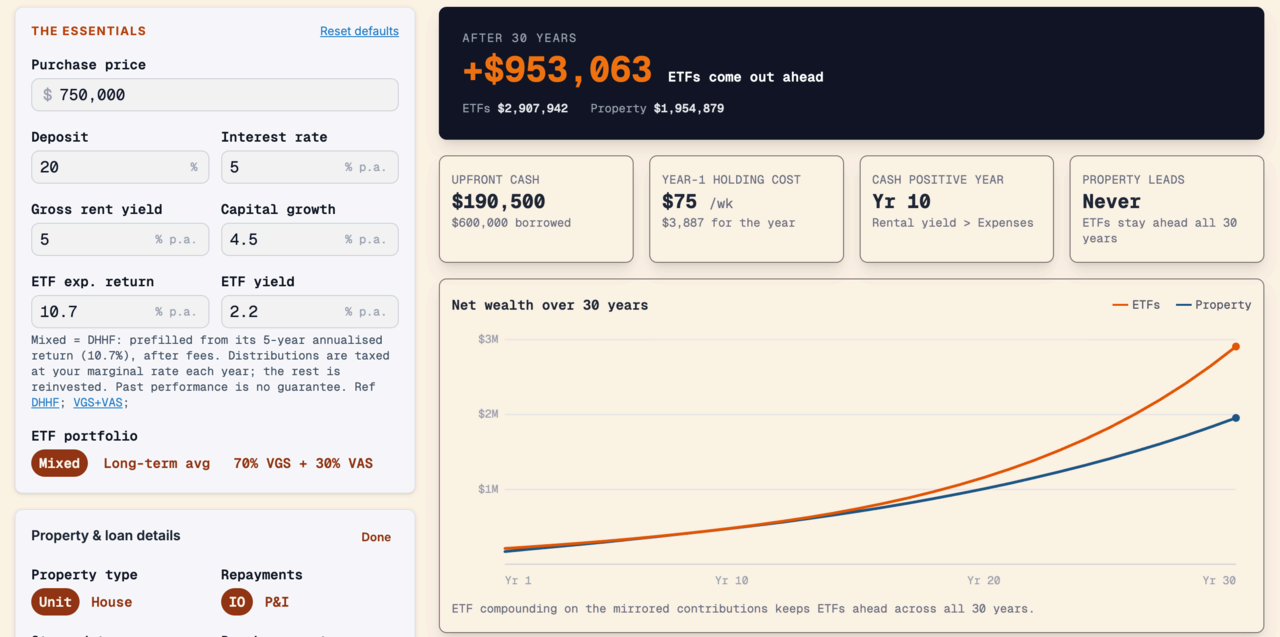
Investing in ETFs vs Property - which one wins?
The core idea is mirrored cash flows. The property scenario pays the deposit, stamp duty and every yearly shortfall. The ETF scenario invests those exact same dollars instead - same upfront cash, same ongoing contributions. If the property turns cash-flow positive, the surplus gets invested too. It models negative gearing, CGT on both sides (including the indexed cost base method coming in 2027), vacancy, strata, rates, maintenance, agent fees and P&I vs IO loans. Every input is adjustable and automatically encoded in the URL so you can share a specific scenario with a simple copy-paste.
With default assumptions ETFs come out $950k ahead in 30 years, but a small change to capital growth or rent yield flips it - which is kind of the point. For example - here are the results for a favourable house investment ($1.5m; 6% capital growth; a bit lower interest rate 4.5% / inflation at 2.5%; A bit lower ETF growth 9% nominal) - it comes out $920k ahead.
What I'd genuinely like to know: what's missing or wrong? I've deliberately left out LMI, land tax, depreciation schedules. All running expenses are indexed to inflation and increase every year.
Also, these are the lists with advantages of ETFs and risks with Property - would you add/remove something?
Advantages of ETFs
- They're diversified. Your money is spread across hundreds or thousands of companies, so one bad apple can't sink you.
- You can sell them gradually. Realise a slice at a time and each gain is taxed at your ordinary marginal rate — typically 30–37% — while the rest of the portfolio keeps compounding.
- Liquidity is high. You can sell ETFs in minutes, while selling a property can take months and efforts.
- You can invest small amounts. ETFs are accessible to most investors, while property requires a large deposit and ongoing cashflow to service the loan.
Risks with property
- It's one concentrated asset. A bad tenant or a natural disaster can potentially destroy your returns.
- You sell it all at once. A large share of a decades-long capital gain lands above the top tax bracket — taxed at 47%.
- Time and effort. Property requires ongoing maintenance, tenant management, and the risk of vacancy. It generally takes more of your time and attention than a simple ETF investment.
- Negative cashflow. If your rental income doesn't cover the mortgage and expenses, you must fund the shortfall from your own pocket, which can be stressful and extra risky.